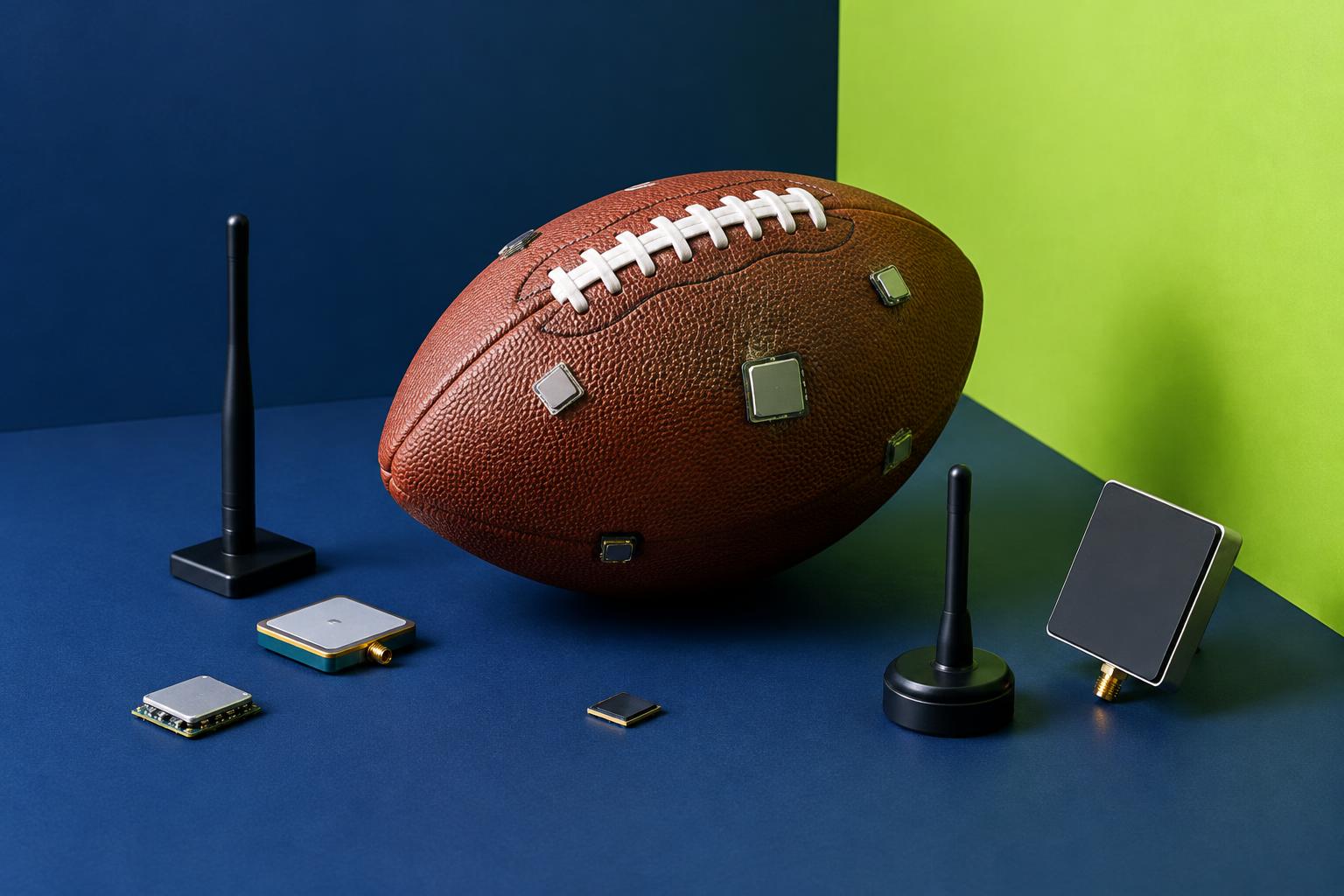
Can AI Predict an NFL Play Before It Happens?
Machine-learning models trained on NFL play-by-play data have predicted run versus pass with up to about 80–86% accuracy in research settings. Here's what AI can realistically predict, what it needs, and why certainty is impossible.

The short answer
AI can estimate the likelihood of a play—run or pass, for example—better than chance, and published research shows models reaching roughly 80 to 86 percent accuracy on that narrow question. But that is a probability about a simplified choice, not a crystal ball. Real play-calling involves shifting formations, human decisions, hidden injuries and incomplete data, so even the best model predicts tendencies, not outcomes.
Machine-learning models trained on NFL play-by-play data have predicted run versus pass with up to about 80–86% accuracy in research settings. Here's what AI can realistically predict, what it needs, and why certainty is impossible.
01 / The story
What 'predicting a play' actually means
Most research does not try to name the exact play. It answers narrower questions: will the offense run or pass? Which direction might a run go? What is the probability of a first down? These are classification and probability problems—well suited to machine learning because the NFL produces enormous amounts of structured historical data.
A peer-reviewed study in the Journal of Sports Analytics built models to predict pass versus rush using data from the 2013–2014 through 2016–2017 regular seasons—1,034 games and 130,344 plays. The goal was an interpretable model useful to coaches in real time, not a black box. [1]
This guide is based on published academic research and documented competitions, checked on October 17, 2026. Qlauson has not built or tested these models. Source numbers refer to the direct links after the FAQs.
02 / The story
What the research shows
A 2020 MIT thesis applied four machine-learning models to NFL play-by-play data from 2009 to 2018, predicting run versus pass in five field situations. The best league-wide models reached about 80 percent test accuracy, and the best team-specific models about 86 percent—roughly 25 to 27 percent better than simply guessing the team's usual run-pass ratio. The study also found some offenses were consistently more predictable than others. [2]
Other work, such as the PlayGuessr project published in 2021, has explored commercial-style play prediction, and the NFL's own Big Data Bowl has invited the public to model tracking data—evidence that the league treats this as a real analytical field. [3]
The honest summary: for a binary run-versus-pass question, models clearly beat naive baselines. For anything more specific—exact route, exact yardage, trick plays—accuracy drops fast, because the possible outcomes multiply.
03 / The story
What data a prediction model needs
The basic ingredients are situation variables: down, distance, field position, score, time remaining and timeouts. Richer models add formation, personnel groupings, player alignment from tracking data, and each team's historical tendencies in the same situation.
Team-specific models work better because play-callers have habits. A model that learns one coach's third-and-long behavior can outperform a league-wide model for that team—which is exactly why coaching staffs study their own 'tendency reports' to avoid becoming predictable. [2]
Tracking data from systems like Next Gen Stats adds player positioning before the snap. That helps, but it also introduces noise: pre-snap motion and disguised coverages exist precisely to fool observers, human or artificial.
04 / The story
Why predictions stay uncertain
Football is adversarial. Unlike predicting weather, the thing being predicted—a coach's decision—is actively trying to be unpredictable. Once a tendency becomes known, smart play-callers exploit it, which changes the very patterns the model learned.
Models also work from incomplete information. They do not know about a player's minor injury, a sideline argument, a gust of wind the quarterback noticed, or a trick play installed that week. Rare events are, by definition, the ones with the least training data.
And probabilities are not verdicts. A model saying '75 percent chance of pass' will be 'wrong' one time in four while being perfectly calibrated. Judging a prediction system on single plays misunderstands what probability means.
05 / The story
How teams and broadcasters actually use prediction
Documented uses are analytical rather than magical. Teams study opponent and self tendencies; broadcasters show win probability and fourth-down decision models; analysts evaluate play-calling against what the numbers suggested. The NFL's Big Data Bowl shows the league encouraging exactly this kind of modeling with real tracking data. [3]
Claims that a specific team uses a specific AI system to call plays should be treated skeptically unless the team or a credible report confirms it. What is documented is the use of analytics and tendency modeling, not autonomous play-calling.
There is also a defensive use: if models can find your tendencies, so can opponents. Modern staffs use similar analysis to break their own patterns—prediction technology pushing the sport toward less predictability.
06 / The story
What could improve—and what probably will not
Better tracking data, richer formation recognition and larger datasets will keep improving probability estimates for common situations. Expect broadcast predictions to feel sharper and team tendency analysis to get faster.
What will not change is the ceiling set by human choice. As long as a coach can call a fake punt on a whim, no model can be certain. The realistic future is better odds, not foresight—and a sport where the smartest teams use AI to be harder to predict, not easier.
A closer look
How to read an AI play prediction
Ask what question the model answers. 'Run or pass' is a two-option question where 80 percent accuracy is achievable. 'Which of forty plays' is a different problem with far lower accuracy. Headlines often blur this difference.
Check the baseline. Saying a model is 80 percent accurate means little if always guessing 'pass' would already be right 65 percent of the time. Good research reports the improvement over the simple baseline—as the MIT thesis did. [2]
Remember the setting. Research models are tested on historical games. Using a model live—against a team actively trying to surprise you—is harder than replaying the past, and published accuracy figures come from the easier task.
Put it to work
Judging a play-prediction claim
Use these questions when you see a claim about AI predicting football plays. They are a reading aid, not an endorsement of any system.
0 of 6 considered
These questions are editorial guidance, not a product score or verified assessment.
Keep learning
Further reading
- How the NFL Uses AI and Player Tracking to Analyze Every Play
Qlauson · Sports Technology
- How to Evaluate AI Models: A Practical Testing Guide (2026)
Qlauson · AI Tools
- What Are AI Agents? How They Work and What They Can Actually Do
Qlauson · Artificial Intelligence
- Journal of Sports Analytics: Predicting plays in the National Football League
External resource · Peer-reviewed study building interpretable pass-versus-rush models from 1,034 games and 130,344 plays. Opens in a new tab.
- MIT: Leveraging machine learning to predict playcalling tendencies in the NFL
Primary documentation · 2020 thesis reporting about 80 percent league-wide and 86 percent team-specific run-pass prediction accuracy, with baselines. Checked Oct 17, 2026. Opens in a new tab.
- PlayGuessr: Commercial Application of Machine Learning in Football Play Prediction
Primary documentation · 2021 conference paper exploring a commercial-style play-prediction application. Checked Oct 17, 2026. Opens in a new tab.
- NFL Football Operations: Performance Tracking Data (Next Gen Stats)
Primary documentation · Official background on the tracking data that modern prediction models can draw on. Checked Oct 17, 2026. Opens in a new tab.
Read next
How the NFL Uses AI and Player Tracking to Analyze Every Play
The NFL's Next Gen Stats system tracks every player on every play using RFID tags, stadium receivers and cloud computing. Here is how the data is collected, what it measures, and where AI actually fits in.
Continue readingNewsletter
Get new Qlauson stories by email.
An occasional email when we publish a new guide or update an important one. No unrelated promotions, and you can unsubscribe from any email.