What Are AI Agents? How They Work and What They Can Actually Do
A practical explanation of AI agents, tools, memory, permissions, and the limits of software that can take several steps toward a goal.

The short answer
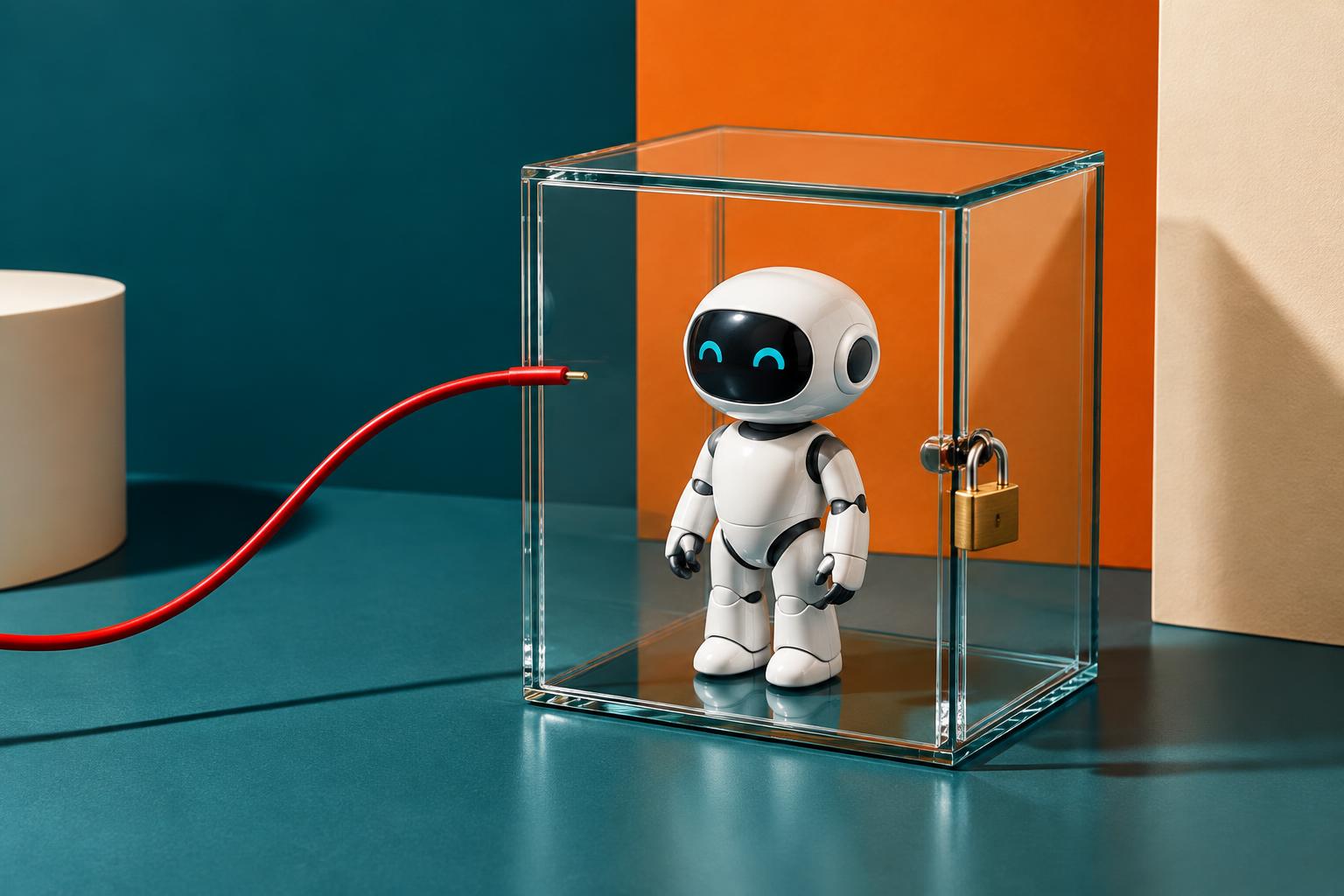
An AI agent is a system that uses a model to choose steps and tools toward a goal, within limits set by its application. It can retrieve information, prepare drafts, and perform permitted actions, but its decisions can be wrong and its authority should be bounded.
A practical explanation of AI agents, tools, memory, permissions, and the limits of software that can take several steps toward a goal.
01 / The story
An agent is a system, not just a clever prompt
An ordinary chatbot often answers a message and waits for the next one. An agent can inspect a result, choose another action, and continue. The difference is in the surrounding software as well as the model. A chat interface may contain an agent, while a product called an agent may only run a fixed sequence of steps.
Anthropic’s Building Effective Agents distinguishes workflows, whose paths are predefined, from agents that let models direct their own processes and tool use. Neither approach is automatically better. A clear, repeatable task may be easier to audit as a workflow. Flexible exploration can help when the next step depends on information discovered along the way.
02 / The story
Tools connect the model to real work
A tool is a function the application makes available, such as looking up an order or searching an approved document collection. The model requests a tool action; application code validates it, checks authorization, and returns a result. The model does not gain legitimate access simply by describing what it wants to do.
Consider a support assistant that retrieves an order, reads a return policy, and drafts a reply. Retrieval is one permission, sending the reply is another, and issuing a refund is a third. This is an illustrative workflow rather than a claim about a named product. Separate those permissions so an uncertain answer cannot silently become a financial action.
| System | Who chooses the next step? | Best question to ask |
|---|---|---|
| Simple chatbot | Usually the next user message | Is the answer supported? |
| Fixed workflow | Application rules | Are exceptions handled? |
| Agent loop | Model within application limits | Are permissions and stopping rules enforced? |
03 / The story
Memory is stored information, not human understanding
An agent can use recent messages, saved notes, retrieved documents, or records from earlier tasks. People often group these mechanisms under memory. They differ in lifespan, storage location, and how the application selects information. A note may persist without being accurate, and a model may ignore a relevant record or misunderstand its meaning.
Memory needs ordinary information controls: who can read it, who can change it, when it expires, and how a person corrects it. Storing everything forever is not a route to reliability. Sensitive records should be limited to a justified purpose, and retrieved material should be treated as evidence to inspect rather than instructions that override the user’s permissions.
04 / The story
Useful agents have stopping rules and accountable owners
An agent loop commonly alternates between choosing an action and observing its result. That loop needs a budget, timeout, or explicit stopping condition. Otherwise a small misunderstanding can create repeated searches, repeated charges, or a long chain of ineffective actions. More steps mean more opportunities for failure, not a guaranteed improvement in reasoning.
For important actions, require meaningful review by someone who can inspect the proposed change and reject it. A human approval button is inadequate if the reviewer cannot see what the action will affect. Keep logs appropriate to the task, protect them from unnecessary exposure, and provide a way to pause the process and recover from partial completion.
05 / The story
What agents can do—and what a demo cannot prove
Practical uses include gathering references for a draft, classifying incoming requests, or preparing a change for review. Tools and checks make those tasks possible; the language model is not a substitute for source verification. A successful demonstration does not establish reliable performance with missing data, contradictory instructions, or unusual cases.
In 2026, judge an agent by task completion, correction effort, permission boundaries, and total cost. This overview complements Qlauson’s earlier beginner definition with a focus on controls and realistic work. It does not promise that 2027 agents will replace jobs, eliminate mistakes, or operate safely without supervision. Any new capability needs evidence from the specific released system.
A closer look
A practical way to judge the claims
Write down one goal, the allowed records, the permitted actions, and a condition that means the task is complete. Then imagine a missing record and an incorrect tool result. If the design has no clear response to those cases, it is not ready for important work.
A sensible starting point is read-only access and draft outputs. Increase authority only after evaluating real examples with the responsible people. Keep the result of an action distinct from the model’s summary: a confident statement that a message was sent is not proof of delivery.
Put it to work
Define an agent’s boundaries
Use these questions before granting access.
0 of 5 considered
These questions are editorial guidance, not a product score or verified assessment.
Keep learning
Further reading
- What Is an AI Agent? How AI Agents Work in 2026
Qlauson · AI Tools
- Building AI Agents: A Practical Guide (2026)
Qlauson · Automation
- Anthropic Engineering — Building Effective Agents
External resource · Published December 19, 2024; distinguishes workflows from agents and explains tool use, feedback, and design trade-offs. Opens in a new tab.
Read next
AI Agent Security: Prompt Injection, Safe Tools, and Containment
AI agents read untrusted text and take real actions. This guide explains prompt injection in plain language, how to give agents safer tools, and how to contain them so a mistake stays small.
Continue readingNewsletter
Get new Qlauson stories by email.
An occasional email when we publish a new guide or update an important one. No unrelated promotions, and you can unsubscribe from any email.