The AI Data Center Boom: Who Pays If the Investment Doesn't Pay Off?
Tech companies are committing hundreds of billions of dollars to AI data centers. We traced the actual disclosures, the financing structures, and the contracts to answer one question: if demand disappoints, who is left holding the bill?
The short answer
The useful question is not 'is AI a bubble?' but whether the cash each project eventually generates covers its purchase, financing, power and replacement costs. Strong current cloud sales can coexist with overinvestment in future capacity. Who absorbs a loss depends on ownership, guarantees, contracts and utility regulation—it does not automatically stop with the company whose logo is on the building. Shareholders, lenders, landlords, customers and even electricity ratepayers can each end up holding part of the risk.
Tech companies are committing hundreds of billions of dollars to AI data centers. We traced the actual disclosures, the financing structures, and the contracts to answer one question: if demand disappoints, who is left holding the bill?
01 / The story
What companies are actually spending
The numbers are enormous, but they mean different things. Microsoft reported $41 billion in quarterly capital expenditure on its July 29 earnings call, including $35.8 billion in cash paid for property and equipment and $5.6 billion in finance leases; roughly two-thirds of its capex was short-lived assets, primarily CPUs and GPUs. Its revised calendar-2026 expectation was approximately $175 billion—guidance, not money already spent. [1]
Alphabet reported Google Cloud revenue of $24.8 billion, up 82%, on July 22, and Reuters reported management raised 2026 capex guidance to $195–205 billion. Meta's July 29 results showed quarterly capex including finance-lease principal of $31.08 billion, with revenue up 28% but operating income down 8%. Amazon's July 30 results showed trailing-twelve-month operating cash flow of $161.4 billion alongside negative $7.6 billion in free cash flow—implying roughly $169 billion in net cash property and equipment purchases over that period, across the whole company, not AWS alone. [2, 3, 4, 5]
Oracle's September 10 results showed cloud infrastructure revenue up 121% to $7.4 billion and remaining performance obligations—contracted future revenue—of $664 billion. Backlog is not cash collected, and not proof of its ultimate margin. [6]
Then there are the partnership announcements. The September 2025 Nvidia–OpenAI announcement was a letter of intent for at least 10 gigawatts of Nvidia systems, with Nvidia intending to invest up to $100 billion progressively as capacity deploys. The Stargate update described nearly 7 GW of planned capacity and over $400 billion of investment over three years. These are conditional intentions and overlapping plans—not cash transferred, and not additive totals. [8, 9]
02 / The story
Follow the contract, not the logo
When a data center fails to earn its keep, the loss lands wherever the contracts put it. Each structure has a different first victim.
If a company funds infrastructure with its own cash, its shareholders take the hit first, through lower returns, depreciation and possible write-downs. With corporate bonds or loans, equity still loses first, but creditors are exposed to default or restructuring. With leased buildings and equipment, the lessee owes contracted rent while the owner or lender carries the residual-value risk. [1, 13]
Newer structures spread risk further. Project financing and private credit can place losses with project equity, lenders and guarantors. Long-term cloud commitments can push unused-capacity costs onto customers. And when a supplier invests in its own customer—as Nvidia's intended investment in OpenAI would—the investor can lose equity at the same time as it loses future product demand. That linkage is real, but it is not automatic proof of fake revenue. [8, 13]
| Funding structure | Who is exposed first if demand disappoints | What to check |
|---|---|---|
| Cash-funded build | The owning company's shareholders | Actual incremental cash flow vs. spending |
| Corporate bonds or loans | Equity first, then creditors | Recourse, maturities, covenants |
| Leased buildings/equipment | Lessee owes rent; owner carries residual value | Lease length, termination rights, guarantees |
| Project finance / private credit | Project equity, lenders, guarantors | Sponsor guarantees, collateral assumptions |
| Long-term cloud commitments | Customers bear unused-capacity costs | Cancellation clauses, credit quality |
| Supplier invests in customer | Investor loses equity and future demand | Whether purchases depend on continued fundraising |
03 / The story
The ratepayer question is real
One group rarely mentioned in AI announcements is electricity customers. When a utility builds grid capacity for a data center that never fully arrives, who pays for the stranded equipment?
Ohio has already answered once. On July 9, 2025, the Public Utilities Commission of Ohio ordered AEP Ohio to create a data-center-specific tariff, explicitly identifying cost-shifting risks from underused infrastructure and adding safeguards for other customers. AEP says the tariff took effect on July 23, 2025. This establishes that stranded-grid-cost concerns are real regulatory issues—not that households inevitably pay every loss. Outcomes depend on each jurisdiction's rules. [12, 14]
04 / The story
Electricity, cooling and the depreciation problem
The International Energy Agency's base case projects worldwide data-center electricity demand of around 945 TWh in 2030—more than double the level when the projection was made—with AI-optimized facilities' demand more than quadrupling. That is a forecast covering all data centers, not an AI-only measurement. [10]
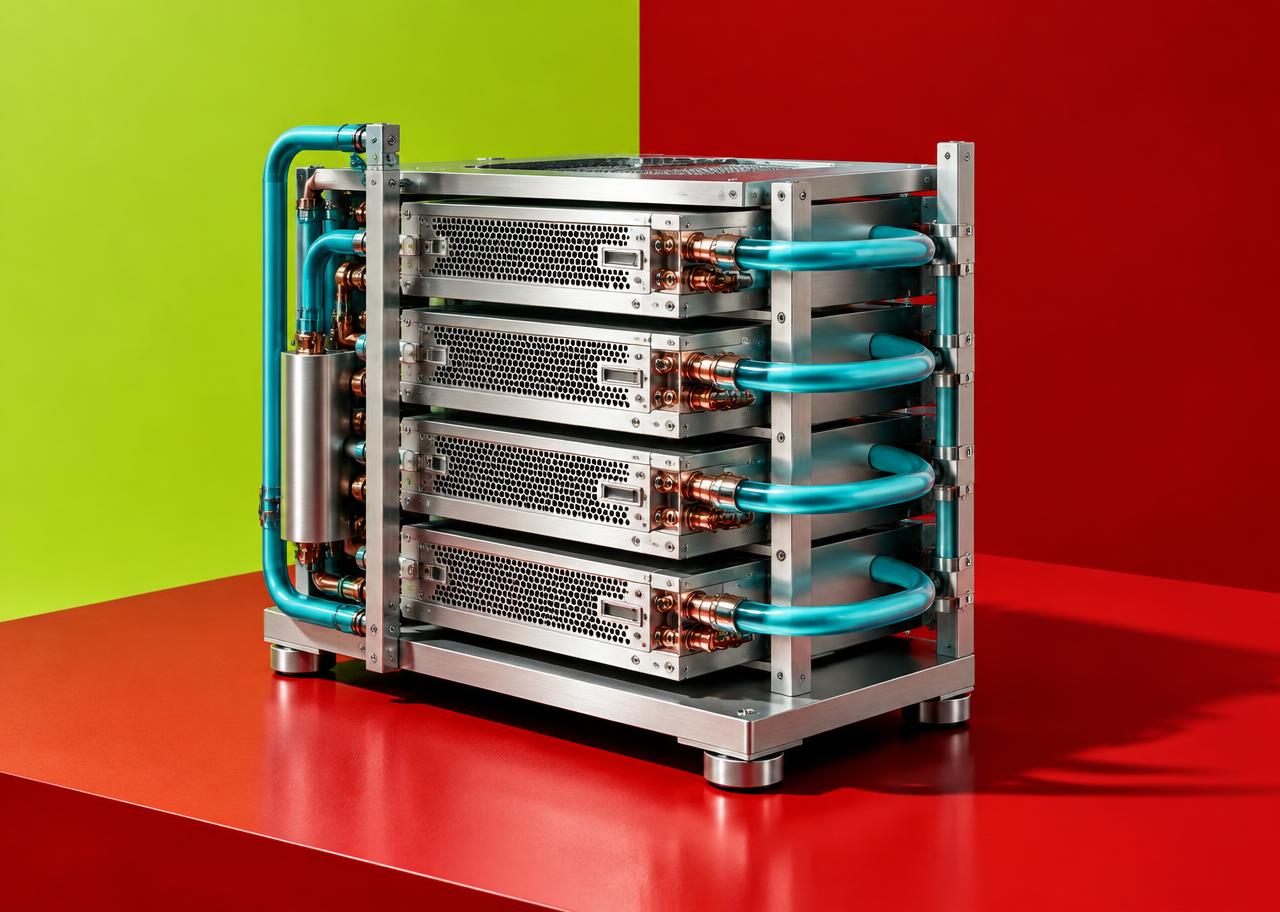
Cooling's share of facility electricity ranges from about 7% at efficient hyperscalers to over 30% at less-efficient enterprise facilities, according to the IEA. To make that concrete: a facility drawing a constant 1 GW uses 8.76 TWh per year; at an assumed $0.07 per kWh, energy alone costs about $613 million per year. That is an illustrative calculation, not a market quote, and it excludes demand charges, equipment, water, financing and taxes. [11]
Depreciation is the quieter risk. Faster chips can undermine an older cluster's price-performance before the hardware physically fails. Microsoft's own disclosure—that about two-thirds of its capex is short-lived compute—shows how much of this spending races against obsolescence. But 'every GPU is worthless after two years' is not supported by the evidence; residual value depends on workload, energy costs and rental prices. [1]
05 / The story
The bubble debate, honestly stated
The evidence supporting concern: capital outlays can outrun internally generated cash, as Amazon's negative trailing free cash flow shows. Reported capex can shift with accounting choices, as Microsoft's lease-classification explanation shows. And supplier-invests-in-customer arrangements create observable feedback loops that deserve scrutiny. [1, 5, 8]
The evidence against 'it's all hype': Microsoft, Alphabet, Amazon and Oracle report substantial current cloud revenue and rapid growth, and Meta has a large existing revenue base. These are operating businesses, not pre-revenue ventures. [2, 4, 5, 6]
What remains unsettled is the part that matters most: whether the incremental AI dollar earns its cost of capital. Broad cloud and advertising revenue does not prove that. Falling utilization and rental prices, impairments, cancellations and refinancing stress would strengthen the bubble case; sustained externally funded demand and positive cash returns after replacement costs would weaken it. Watch those signals, not the headline totals.
A closer look
What we verified and what stays uncertain
This analysis is desk research based on company earnings disclosures, SEC-filed exhibits, regulator orders and announced partnerships, checked on October 17, 2026. Periods and accounting definitions differ between companies, so we deliberately do not add the numbers into one 'AI spending total.' Qlauson has not audited any company's books.
Uncertain as of publication: realized utilization and rental prices for future clusters, project-by-project returns, OpenAI's ability to fund all its commitments, the guarantees behind private financing vehicles, and older-chip resale values. No bubble verdict is proven by the evidence collected here.
Put it to work
How to read any AI infrastructure announcement
Before treating a big number as money spent, check:
0 of 5 considered
These questions are editorial guidance, not a product score or verified assessment.
Keep learning
Further reading
- What Happens Inside an AI Data Center?
Qlauson · Cloud and Infrastructure
- AI Needs More Electricity: Can Batteries and New Energy Technology Keep Up?
Qlauson · Cloud and Infrastructure
- Why AI API Bills Surprise People — and How to Prevent It
Qlauson · APIs
- Microsoft FY2026 Q4 Earnings Conference Call — Microsoft Investor Relations, Jul 29, 2026
External resource · Quarterly capex, cash PP&E, finance leases and asset-life explanation. Opens in a new tab.
- Alphabet Announces Second Quarter 2026 Results — Alphabet, Jul 22, 2026
Primary documentation · Google Cloud revenue and growth. Checked Oct 17, 2026. Opens in a new tab.
- Google increases capex forecast again after cloud-driven quarterly beat — Reuters, Jul 22, 2026
Primary documentation · Reported 2026 capex guidance of $195–205 billion. Checked Oct 17, 2026. Opens in a new tab.
- Meta Reports Second Quarter 2026 Results — Meta, SEC-filed exhibit, Jul 29, 2026
Primary documentation · Quarterly capex, revenue and operating income. Checked Oct 17, 2026. Opens in a new tab.
- Amazon.com Announces Second Quarter Results — Amazon, SEC-filed exhibit, Jul 30, 2026
Primary documentation · Operating cash flow, negative free cash flow and AWS growth. Checked Oct 17, 2026. Opens in a new tab.
- Oracle Announces Q1 Results Driven by Triple Digit Growth in Cloud Infrastructure Revenues — Oracle, SEC-filed exhibit, Sep 10, 2026
Primary documentation · Cloud infrastructure revenue, $664 billion remaining performance obligations, 850 MW added. Checked Oct 17, 2026. Opens in a new tab.
- OpenAI and NVIDIA Announce Strategic Partnership to Deploy 10 Gigawatts of NVIDIA Systems — Nvidia Newsroom, Sep 22, 2025
Primary documentation · Letter of intent; 'up to $100 billion' is a conditional intention. Checked Oct 17, 2026. Opens in a new tab.
- OpenAI, Oracle, and SoftBank expand Stargate with five new AI data center sites — OpenAI, Sep 23, 2025
Primary documentation · Planned capacity and investment figures; overlapping totals are not additive. Checked Oct 17, 2026. Opens in a new tab.
- AI is set to drive surging electricity demand from data centres — IEA, Apr 10, 2025
Primary documentation · Base-case projection of ~945 TWh global data-center demand in 2030. Checked Oct 17, 2026. Opens in a new tab.
- Energy demand from AI, chapter in Energy and AI — IEA, Apr 10, 2025
Primary documentation · Cooling's share of facility electricity: ~7% efficient hyperscale to 30%+ enterprise. Checked Oct 17, 2026. Opens in a new tab.
- PUCO orders AEP Ohio to create data center specific tariff — Public Utilities Commission of Ohio, Jul 9, 2025
Primary documentation · Regulator order addressing cost-shifting from underused infrastructure. Checked Oct 17, 2026. Opens in a new tab.
- Financing the AI build-out — Union Bancaire Privée, Sep 16, 2026
Primary documentation · Investment research on debt, project finance and chip-backed loans; analyst estimates, not audited totals. Checked Oct 17, 2026. Opens in a new tab.
- Data Center Tariff — AEP Ohio, undated living page, consulted Oct 17, 2026
Primary documentation · Tariff effective dates and study tranches. Checked Oct 17, 2026. Opens in a new tab.
Read next
AI Needs More Electricity: Can Batteries and New Energy Technology Keep Up?
Data-center electricity demand is climbing fast, and tech companies are signing battery, solar and even nuclear deals to keep up. Here is what the numbers actually show—and what each technology can and cannot do.
Continue readingNewsletter
Get new Qlauson stories by email.
An occasional email when we publish a new guide or update an important one. No unrelated promotions, and you can unsubscribe from any email.