What Is RISC-V? The Open Processor Architecture Explained
Understand the RISC-V instruction set, what open means, how it differs from Arm and x86, and why a processor standard is not a performance guarantee.
The short answer
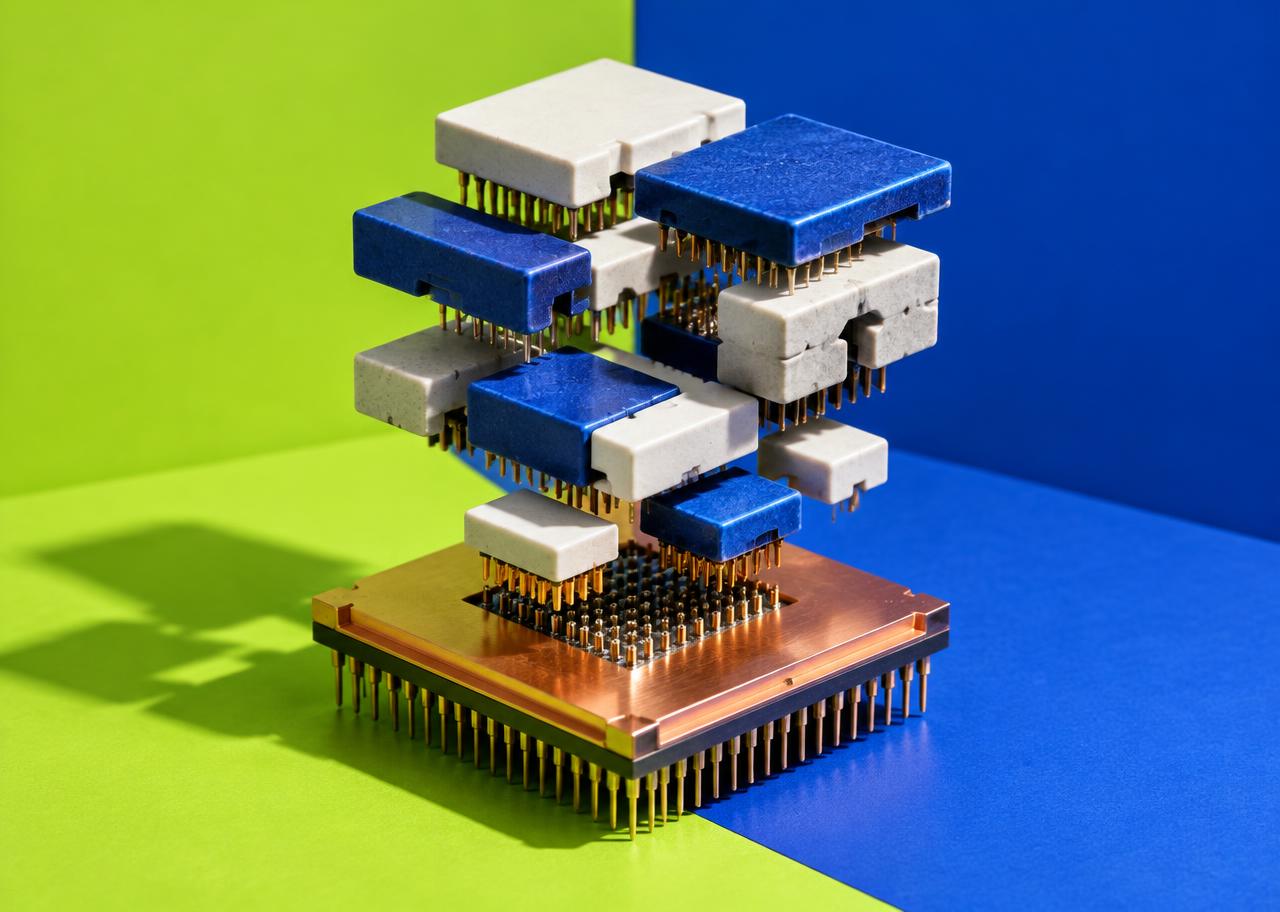
RISC-V is an open instruction set architecture: a specification for the operations software can ask a processor to perform. It is not one chip, an automatic speed advantage, or a promise that every implementation is open-source. Designers still need hardware, tools, and compatible software.
Understand the RISC-V instruction set, what open means, how it differs from Arm and x86, and why a processor standard is not a performance guarantee.
01 / The story
An instruction set is the contract software relies on
An instruction set architecture, or ISA, defines machine-level operations and behavior visible to software. A processor implementation turns that contract into circuits. Two processors following the same ISA can have different performance, power use, memory systems, and manufacturing costs because their internal designs differ.
Think of the ISA as a shared vocabulary rather than a complete factory. It tells software which instructions exist, not how quickly a particular chip executes them. RISC-V International maintains standard specifications; its history page explicitly distinguishes that work from providing processor implementations. This distinction prevents an open standard from being mistaken for a ready-made computer.
02 / The story
Open means usable specifications, not free manufacturing
RISC-V’s instruction set is an open standard that allows designers to develop implementations without a proprietary ISA license for the standard itself. A particular core design may still be commercial, and supporting components can have separate intellectual-property terms. Fabrication, verification, engineering, and software support all remain real costs.
Downloadable specifications therefore do not make every chip’s source design public. They also do not establish that a product is safer or more private. Security depends on implementation and the wider system. Check the actual core license, toolchain, firmware, and supplier terms instead of extending the word open into a blanket legal or quality claim.
| Layer | What to inspect | Why it matters |
|---|---|---|
| ISA | Base instructions and required extensions | Determines the software contract |
| Core implementation | Performance, power, and license | Open ISA does not mean open chip design |
| Platform | Memory, peripherals, firmware | A CPU is not the complete device |
| Ecosystem | Operating system, apps, tools, updates | Booting is not complete compatibility |
03 / The story
RISC-V versus Arm and x86 is not a speed contest
Arm, x86, and RISC-V describe different instruction-set ecosystems. Arm and x86 have extensive commercial software and hardware histories; RISC-V provides an open standard with a modular approach to extensions. The choice matters for available binaries, operating systems, compilers, and supported devices as well as hardware design.
An ISA name alone cannot establish which chip is faster or more energy-efficient. Compare specific processors under the same workload and conditions. A small embedded RISC-V controller is not a meaningful substitute for a workstation-class x86 processor merely because both execute programs. Likewise, an Arm-based system’s performance is not explained solely by the letters in its architecture name.
04 / The story
Extensions enable flexibility and create compatibility questions
RISC-V combines a base instruction set with standard extensions for additional operations. Implementations need not support every possible feature. Software compiled for one set of extensions may not run unchanged on a different target. Standardization and clearly defined platform requirements help developers understand the available contract.
Custom extensions can serve specialized tasks, including parts of an AI-oriented system. They also require software support and can reduce portability if applications depend on features other chips lack. An AI accelerator and its host processor do different work; a RISC-V control core does not prove that the chip’s main AI calculations use RISC-V instructions.
05 / The story
Adoption must be judged application by application
RISC-V is relevant to embedded systems, research, and custom processor design, while broader computing requires a complete ecosystem. Operating-system support is only one piece. Applications, drivers, firmware, debugging, security maintenance, and supply continuity all matter before a product becomes a practical choice.
For 2026, evaluate the actual device and its documented support rather than predicting market replacement. This guide does not promise that RISC-V will displace Arm or x86 in 2027, match every desktop application, or deliver a universal efficiency advantage. An open standard creates design opportunities; adoption and performance require evidence from particular implementations.
A closer look
A practical way to judge the claims
Before choosing a development board, list the operating system, peripherals, tools, and applications you need. Confirm the supported ISA extensions and the vendor’s update policy. A successful boot demonstration does not establish long-term support or application compatibility.
For an AI hardware announcement, identify whether RISC-V controls the device, performs general processing, or implements a specialized computation path. Keeping those roles distinct is more informative than labeling the entire product an AI chip and assuming how it works.
Put it to work
Evaluate a RISC-V product
Check the implementation rather than the architecture label.
0 of 5 considered
These questions are editorial guidance, not a product score or verified assessment.
Keep learning
Further reading
- What Happens Inside an AI Data Center?
Qlauson · Cloud and Infrastructure
- Local AI vs Cloud AI: Privacy, Cost, Speed, and Performance
Qlauson · AI and Software
- RISC-V International — About and History
External resource · Explains the open standard’s origins and the distinction between ISA specifications and implementations. Opens in a new tab.
- RISC-V International — Unprivileged ISA Manual
Primary documentation · Official instruction-set reference; individual extensions and implementations require checking their applicable specifications. Checked Oct 15, 2026. Opens in a new tab.
Read next
[Video] Tesla's Flying Car: What Is Real & Can It Fly?
Tesla showed a Roadster prototype hopping over cars with SpaceX cold-gas thrusters on Oct 15, 2026. Here is what was demonstrated, what it costs to reserve, when it may ship, and why it is not an aircraft.
Continue readingNewsletter
Get new Qlauson stories by email.
An occasional email when we publish a new guide or update an important one. No unrelated promotions, and you can unsubscribe from any email.