The New Apple TV 4K Explained: What Changes, Who Needs It, and What to Compare
Apple's fourth-generation Apple TV 4K swaps in an A19 chip, far-field microphones, and a Find My-enabled remote for $299. Here is what is genuinely new, what is marketing language, and who should actually upgrade.
The short answer
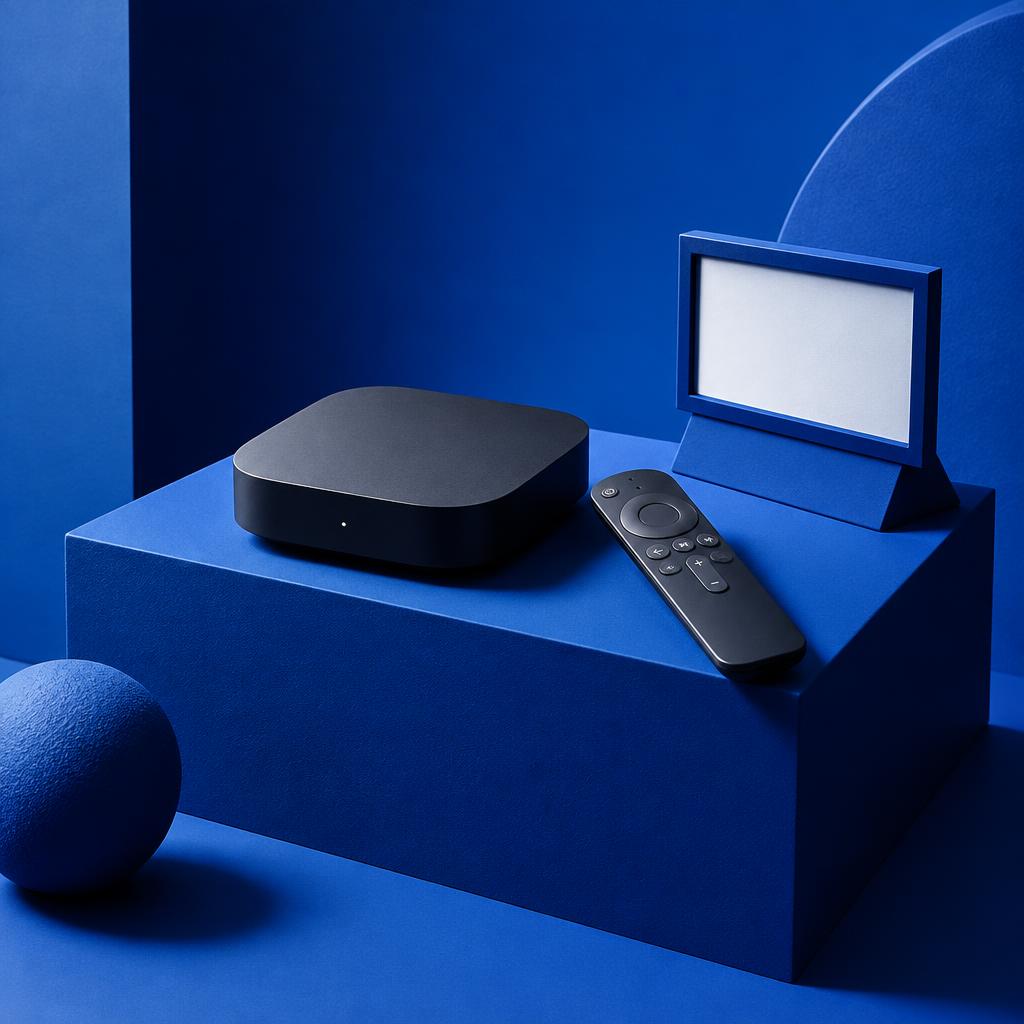
The new Apple TV 4K is a real hardware refresh—A19 chip, three far-field microphones, a Siri Remote with Find My, Wi-Fi 7, and four-speaker HomePod surround support—but it is not yet a reviewed product. Apple's 'up to 50% faster CPU' and 'ultimate cinematic experience' are manufacturer claims, not independent measurements. The strongest reasons to buy are the new voice control, the remote, and the multi-speaker surround option. If your current Apple TV 4K works well, Siri AI is also coming to older models in software, so waiting for independent tests costs nothing.
Apple's fourth-generation Apple TV 4K swaps in an A19 chip, far-field microphones, and a Find My-enabled remote for $299. Here is what is genuinely new, what is marketing language, and who should actually upgrade.
01 / The story
The short answer
Apple announced the fourth-generation Apple TV 4K on October 13, 2026, with preorders the same day and availability on November 13, at $299. It replaces the A15 Bionic with an A19, adds three far-field microphones for hands-free Siri, ships an updated Siri Remote with Find My and Precision Finding, and supports a four-speaker surround setup with eligible HomePod speakers. [1, 2]
Whether it is 'worth it' depends entirely on which of those features you will use. A faster chip in a streaming box mostly means a snappier interface—it does not make the shows you stream sharper, because resolution and bitrate come from the streaming service, not the box.
02 / The story
Watch the official announcement
Video in this section · scroll down to watch
This is Apple's own launch video. Treat 'the ultimate cinematic experience' as a marketing line, not a measured result.
Video: “The new Apple TV 4K: The ultimate cinematic experience.” posted by Apple on YouTube. Vehicle and event by Apple.
Watch on YouTubeApple on YouTubeVisit Apple's websiteApple on YouTube
This video is embedded from YouTube for news and educational purposes. It is Apple's own promotional material; Qlauson did not make it and is not endorsed by Apple. All rights belong to their owners. Links open in a new tab.
03 / The story
What is actually new
Confirmed hardware changes, per Apple's announcement and dated coverage: the A19 chip, three far-field microphones, the Find My-enabled Siri Remote, Wi-Fi 7, Bluetooth 6, Thread support, HDMI 2.1, AV1 decoding, and 128GB of storage. Apple's claims of 'up to 50%' faster CPU performance and 'up to twice' the graphics performance are the manufacturer's own figures—useful as direction, not as independent measurements. [1, 2, 3]
One caution: a MacRumors report suggested 8GB of RAM, but explicitly as speculation. Until Apple or a teardown confirms it, treat memory capacity as unknown. [2]
04 / The story
What is not exclusive to the new box
The headline software feature, Siri AI, is also planned in beta for the second-generation and later Apple TV 4K with tvOS 27.2. Personal-context requests depend on pairing with an Apple Intelligence-capable iPhone or iPad. So if the smarter assistant is your main interest, your current Apple TV may get it free. [2, 4]
Similarly, the four-speaker surround feature requires both the new Apple TV and eligible speakers—HomePod mini 2 or second-generation HomePod. Original HomePod mini owners are not included. Check your speaker generation before counting this as a reason to upgrade. [2, 4]
05 / The story
How it compares on price
At $299, the new Apple TV 4K costs roughly twice the Google TV Streamer's $149.99 launch price, as noted in dated comparison coverage. Android Authority highlighted the A19 and AV1 proposition against Google's box, but no independent benchmark of the new Apple TV exists yet—it has not shipped. Treat all competitor pricing as a snapshot from mid-October 2026, not a permanent gap. [5, 6]
What the money buys in Apple's case is ecosystem integration: FaceTime on TV, Apple Home control, AirPlay, and now multi-speaker surround. If your home is not built around Apple devices, cheaper streamers deliver the same Netflix picture.
06 / The story
Who should upgrade, and who should wait
Our analysis: buy it if you specifically want hands-free voice control, lose your remote often enough to value Find My, or plan a compatible four-HomePod surround setup. Wait if your current Apple TV 4K (second generation or later) works well—Siri AI is coming to it in software, and independent reviews arriving after the November 13 ship date will tell you whether the A19 makes a difference you can feel.
And if you are buying your first streaming box mainly to watch Netflix, Disney+, or YouTube, the picture quality will be identical on far cheaper hardware. The Apple TV 4K's value is in everything around the video, not the video itself.
A closer look
What we verified and what stays uncertain
This article is based on Apple's October 13, 2026 announcement, Apple's specification page, and dated launch coverage, checked on October 18, 2026. The device ships November 13, so no independent performance testing exists yet.
Uncertain as of publication: a suggested 8GB of RAM in one report is explicitly speculative and not a confirmed specification. Competitor prices cited here are dated snapshots, not permanent prices. The embedded video's upload date is corroborated by same-day coverage but not independently extracted from YouTube.
Put it to work
Before buying the new Apple TV 4K
Check whether the new features match how you actually watch:
0 of 5 considered
These questions are editorial guidance, not a product score or verified assessment.
Keep learning
Further reading
- Apple HomeView: Apple's Smart-Home Hub, Siri AI, Price and Availability
Qlauson · Emerging Technology
- Apple HomePod mini 2: Features, Sound, Smart Home Uses, and Alternatives
Qlauson · Emerging Technology
- iPhone 18 Pro After a Few Weeks: What Owners Love, What They Dislike, and What Still Needs Fixing
Qlauson · Emerging Technology
- Apple: Apple unveils the new Apple TV 4K (Oct 13, 2026)
External resource · Official announcement; manufacturer claims. Opens in a new tab.
- MacRumors: New Apple TV 4K announced (Oct 13, 2026)
Primary documentation · Launch details; RAM figure explicitly speculative. Checked Oct 18, 2026. Opens in a new tab.
- Apple: Apple TV 4K specifications (undated)
Primary documentation · Living specification page; supplemental to dated sources. Checked Oct 18, 2026. Opens in a new tab.
- Engadget: New Apple TV 4K with Siri AI (Oct 13, 2026)
Primary documentation · Software support and feature context. Checked Oct 18, 2026. Opens in a new tab.
- Android Authority: New Apple TV 4K (Oct 13, 2026)
Primary documentation · Competitive positioning; no independent benchmarks. Checked Oct 18, 2026. Opens in a new tab.
- TechRepublic: Apple TV 4K vs Google TV Streamer (Oct 14, 2026)
Primary documentation · Dated price comparison snapshot. Checked Oct 18, 2026. Opens in a new tab.
Read next
Behind Apple's Stop-Motion Gaming Story: The Technology and Craft Behind the Animation
Apple's behind-the-scenes film for its Games campaign shows sculpted props, handmade rockets, and frame-by-frame animation—with digital tools in the mix. Here is what the video actually documents, and what it does not.
Continue readingNewsletter
Get new Qlauson stories by email.
An occasional email when we publish a new guide or update an important one. No unrelated promotions, and you can unsubscribe from any email.